
Why Gascony Is Much More Than a Region: 5 Ways to Understand Its Gastronomy, Culture and Gentle Pace of Life
Gastronomy, culture, pace of life, villages and conviviality: practical reference points for understanding the Gascon way of life through the Gers.
No time to read?
- The Gascon way of life rests on a rare balance of conviviality, an unhurried pace, local rootedness and a high quality living environment.
- In the Gers, this way of life is visible in markets, restaurants and village festivals just as much as in the way people live in the villages and countryside.
- Local gastronomy is about far more than its best-known products: it tells the story of a region, its seasons and its traditions.
- Gascon culture brings together heritage, local accent, festivals, rugby, music and the passing on of traditions, all with a very lively local presence.
- For a future buyer, understanding this way of life helps in choosing an area that truly fits their lifestyle, not simply an attractive property.
What really defines the Gascon way of life today?
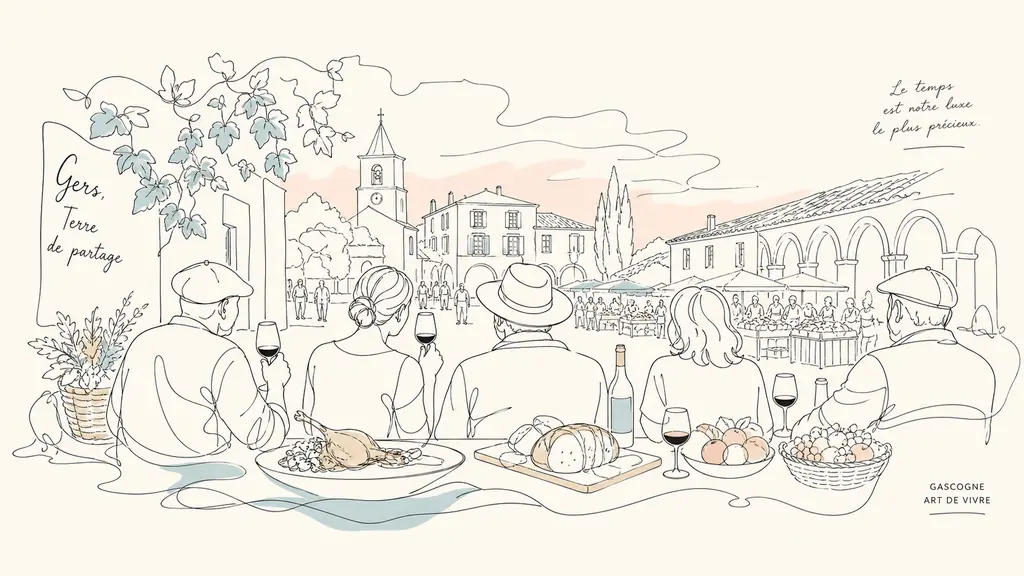
The Gascon way of life is defined first and foremost by a way of living day to day, not simply by geography. In the Gers, you see it in people’s relationship with time, in the quality of everyday exchanges and in a local way of life that still values what is shared, cultivated and enjoyed outdoors.
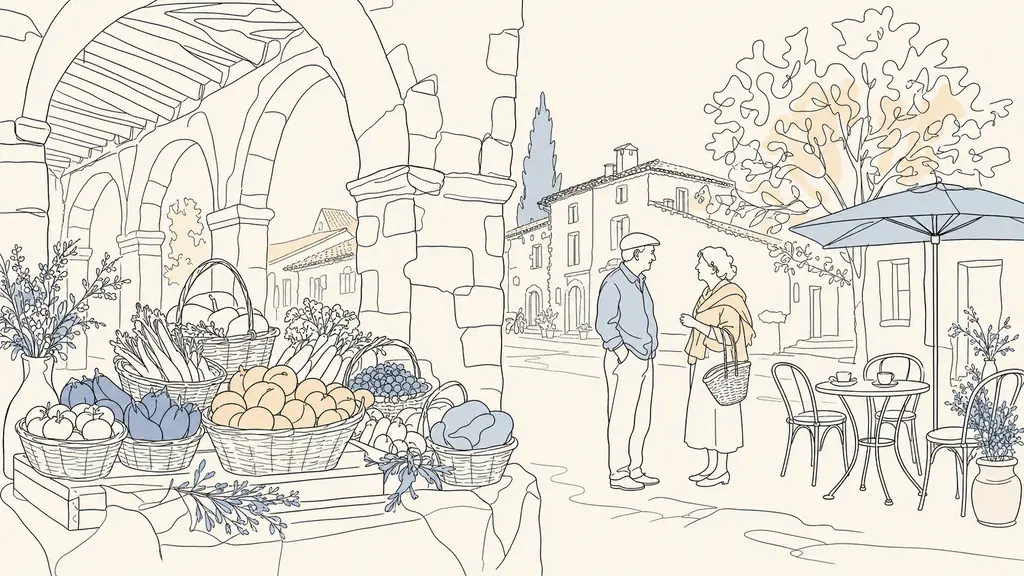
In practical terms, this gentle pace of life does not come from a picture-postcard setting, but from deeply rooted habits. A Saturday morning market in Lectoure, a terrace slowly filling up in Auch, a conversation that lingers by a producer’s stall: these are ordinary scenes, yet highly revealing. Here, the village is not just an attractive backdrop. It is where you shop, where you see familiar faces, where you catch up on local news, and where you quickly sense whether you truly feel at home.
This way of life can be summed up in a few very tangible reference points:
- a more legible rhythm of life, with days less driven by urgency and more shaped by the seasons, the market, meals and local life
- an easy sociability, where welcoming people matters just as much as owning things, whether that means lunch beneath the vine, a coffee in the square or an impromptu supper with neighbours
- lived-in landscapes, never fully separated from everyday life, with fields, paths, bastides and hilltop villages forming part of daily experience, not merely the postcard view
- an appreciation for what is good, lasting and local, found in market halls, farms, wine cellars, small restaurants and the care given to old houses
This is also what draws many buyers from Toulouse and elsewhere, and then encourages them to look beyond first impressions. Living in Gascony means appreciating space, calm, human-scale services and a certain everyday patience. You gain breathing room, genuine neighbourliness and a better quality setting, but you must also accept that here not everything is immediate or standardised.
At heart, the Gascon way of life lies in that rare balance between conviviality, everyday beauty and practicality. It is not about slowing down for appearances’ sake, but about making more room for what truly matters: a good meal, an open house, a lively village, a landscape you inhabit as much as admire. That is no doubt why, in the Gers, people do not only come in search of a property, but often in search of a better way to live.
How do gastronomy and culture make Gascony so appealing when you want to live in the Gers?
Because here, gastronomy and culture do not simply serve to charm visitors: they give real depth to everyday life. When you are considering living in the Gers, they help you gauge something very concrete: a region’s ability to create routines, meeting points and a genuine sense of belonging.
“48th FESTIVAL: 20/07 > 05/08” (Jazz in Marciac, home page 2026)
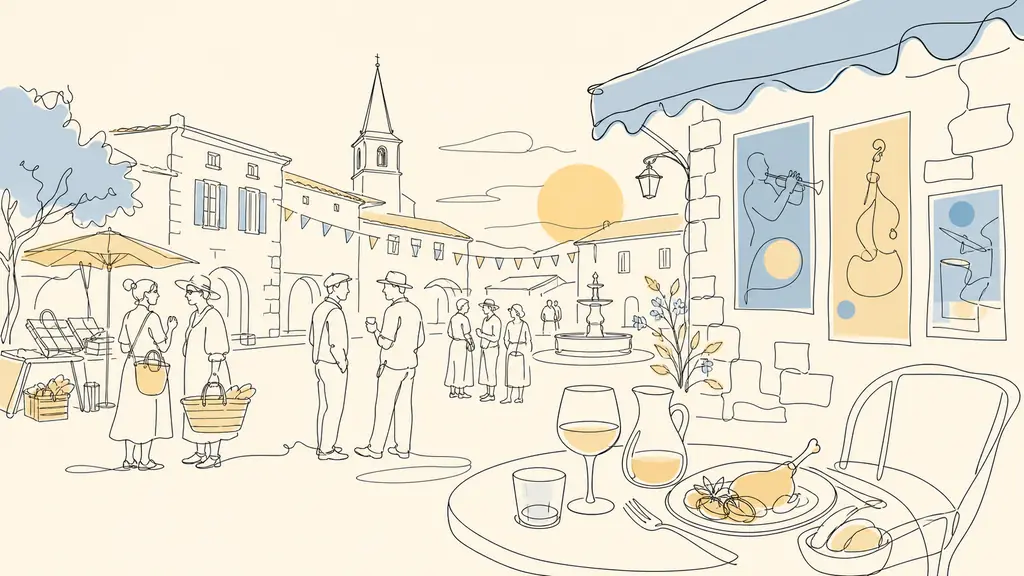
That longevity says a great deal about Gascony today. In Marciac, a jazz festival that has become an international landmark still sets the pulse of a Gers market town every summer without erasing its local identity. That is often what creates a lasting attachment: a place able to welcome, pass things on and remain vibrant beyond the big cities. The same applies to village festivals, bandas, meals beneath the market hall and Sunday rugby matches, where you quickly understand that culture is not scenery, but a very real social bond.
On a day-to-day basis, that depth is felt in simple things, but things that matter when you imagine yourself in a house or a village:
- markets and local producers give the week a real rhythm; you are not simply buying produce, you learn where to go, whom to trust and what to expect from the season
- Gers cuisine, from duck to Armagnac and the village restaurants in between, extends the idea of a life centred on hospitality at home, with a house designed for sharing
- the built heritage, bastides, arcaded squares, old farmhouses and dovecotes, creates a lived-in setting that matters as much for the pleasure of living there as for a property’s value
- shared activities, rugby, concerts, local festivals, choirs and workshops, make settling in feel less abstract, especially if you are arriving from Toulouse or from a more anonymous environment
That is also what makes the difference between a simple crush and a viable residential project. A village that looks appealing in photographs is not always enough, but a village with a regular market, a cultural season, community life and shared moments is far easier to live in over the long term. In Gascony, the gentle pace of life comes precisely from this blend of flavours, sociability and transmission. For many buyers, it is not an added extra, but one of the best indicators of whether they will truly feel at home.
FAQ
Is the Gascon way of life limited to gastronomy?
No. Food is one way into it, but the Gascon way of life also embraces people’s relationship with time, sociability, local festivals, landscapes, markets and village life.
Why does the Gers embody the gentle Gascon way of life so well?
The Gers brings together several strong markers: low rural density, historic heritage, human-scale market towns and villages, a festive culture and an attachment to local produce, all of which make this way of life very tangible on a daily basis.
Does this way of life also attract buyers from the cities?
Yes, especially households looking for more space, more peace and quiet, and a more legible local life. But it also means accepting certain constraints, such as distances, reliance on the car and maintaining older properties.
What signs should you look for to know whether a village really suits this way of life?
You need to look at whether there is a market, useful shops, local associations, events, good access and a real level of activity outside the holiday season, not simply the charm of the façades.

Faye Gagnon rédige des contenus clairs et utiles pour aider les lecteurs à mieux comprendre l’immobilier dans le Gers et en Gascogne. Attentive aux réalités du terrain, elle s’attache à rendre accessibles les sujets liés à l’achat, à la vente et à la vie locale avec un ton chaleureux et fiable.
Envie d'aller plus loin ?
Laisse ton email, on te prévient dès qu'un nouvel article sort.