
Homes and Properties in Gascony: 6 Building Styles to Recognise Before You Buy
Village house, maison de maître, Gascon farmhouse: practical ways to read the local architecture and avoid costly mistakes when buying in the Gers.
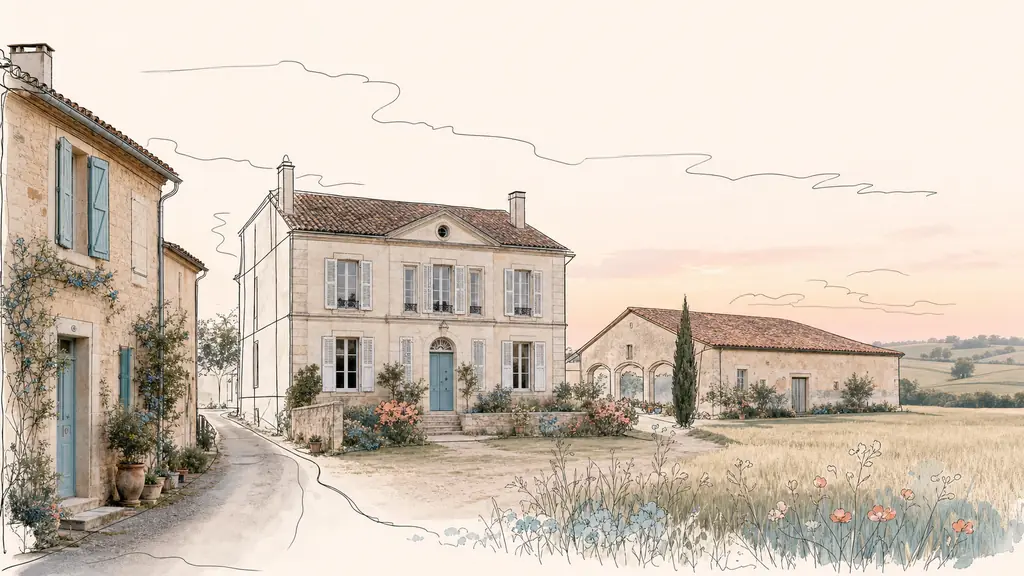
- In Gascony, a property’s style already tells you a great deal about how it was used, the work it is likely to need and its heritage value.
- The main categories to distinguish are the village house, the maison de maître, the Gascon farmhouse, the rural property, the stone building to renovate and the group of buildings with outbuildings.
- Charm alone is not enough: the roof, damp, room proportions, outbuildings, access, orientation and energy performance can all dramatically change the true budget.
- In the Gers, where houses make up by far the largest share of the housing stock, reading a building properly makes it easier to compare two properties beyond the photos and first impressions.
What styles of houses and properties do you actually find in Gascony?
In Gascony, there is no single « typical » house. There are several building types, and that first distinction often tells you the most about everyday life once you move in. Before you even start talking about price or falling in love with a place, you need to recognise the property’s style, because it reveals a lot about maintenance, natural light, proximity to neighbours and how the land is likely to be used.
In the Gers, six broad profiles come up again and again. You may find several in the same area, sometimes even within a single village, but they do not tell the same story. A village house does not imply the same way of living as an isolated farmhouse, and a maison de maître does not involve the same compromises as a converted former outbuilding. If you are looking for useful reference points when choosing a character property in the Gers, this is often the best place to start.
Here are the styles you are most likely to come across:
– The village house, fronting directly onto the street, on a more compact plot, practical for walking to local amenities.
– The Gascon farmhouse, with agricultural volumes, outbuildings and a direct relationship with the yard or surrounding land.
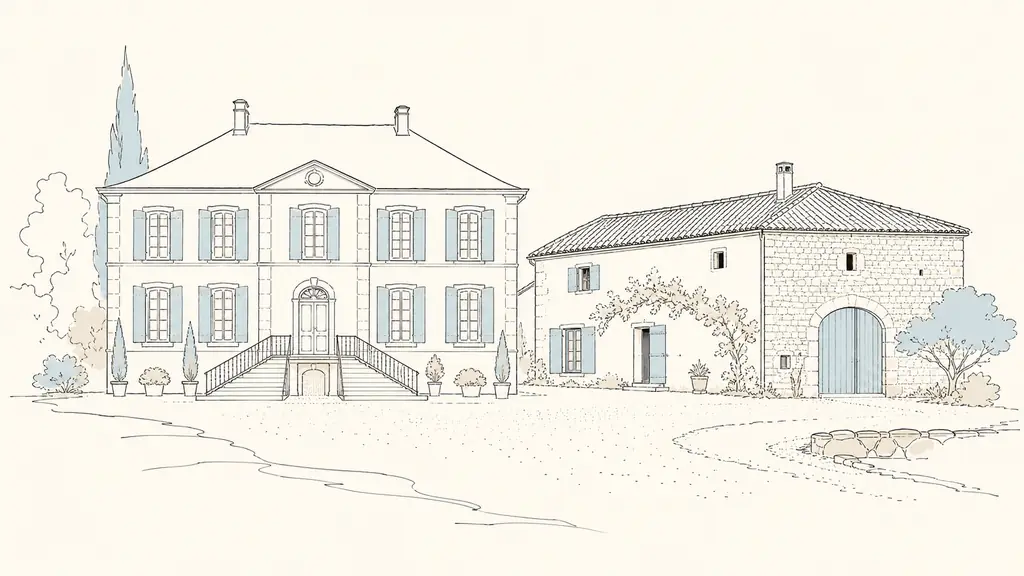
– The maison de maître, with a grander, more symmetrical composition, generous ceiling heights and strong heritage presence.
– The Gascon chartreuse, or elongated single-storey house, rarer, but very pleasant for step-free living.
– The former métairie or converted outbuilding, with raw charm and real potential, but sometimes a less straightforward layout.
– The small rural estate, with a main house plus annexes, suited to large family living or a hospitality project.
What truly changes from one to another is how you live in them. A village house makes day-to-day logistics easier, but gives you less privacy outdoors. A farmhouse or métairie may be irresistible because of the space, then quickly reminds you of its demands: roofing, drainage, access and upkeep of the grounds. A maison de maître is appealing for its proportions, but it does not respond well to rough or poorly judged renovation. To refine your eye for traditional forms and materials, the Inventaire du patrimoine culturel d’Occitanie, consulted in July 2026 is also a very useful visual reference.
| Building style | Common visual signs | Main advantage | Point to watch |
|---|---|---|---|
| Village house | aligned façade, very little setback, patio or small garden | easier life in the heart of a village | overlooking, parking |
| Gascon farmhouse | main house + barn, courtyard, practical utility volumes | space and potential | major works, isolation |
| Maison de maître | regular bays, central staircase, high ceilings | character, entertaining, heritage value | overall maintenance cost |
| Gascon chartreuse | low, elongated house, easy flow throughout | comfortable single-storey living | rarer, sometimes stretched layout |
| Converted métairie | period materials, mixed volumes, outbuildings | charm and flexible use | consistency of the renovation |
| Small rural estate | house + gîtes, barn or parkland | family or semi-professional project | management, tax, land upkeep |
So the right reflex during a viewing is to identify the building family first, then check whether it genuinely matches your pace of life. In the Gers, that is often where the difference lies between a lovely photo and the right purchase.
What should you check before buying a Gascon house in south-west France?
Before buying a Gascon house, the real issue is not its charm, but what that charm may be hiding in terms of maintenance, comfort and the constraints of everyday living. You need to read a property in this order: structure, damp, services, drainage, then how well it fits your actual use.
In the Gers, houses account for 81.3% of all homes, and 25.1% of main residences were completed before 1919, according to Insee, Dossier complet du Gers, published on 23/07/2026. In other words, viewing period property here almost always means thinking in terms of long-term upkeep, not simply falling for a place.
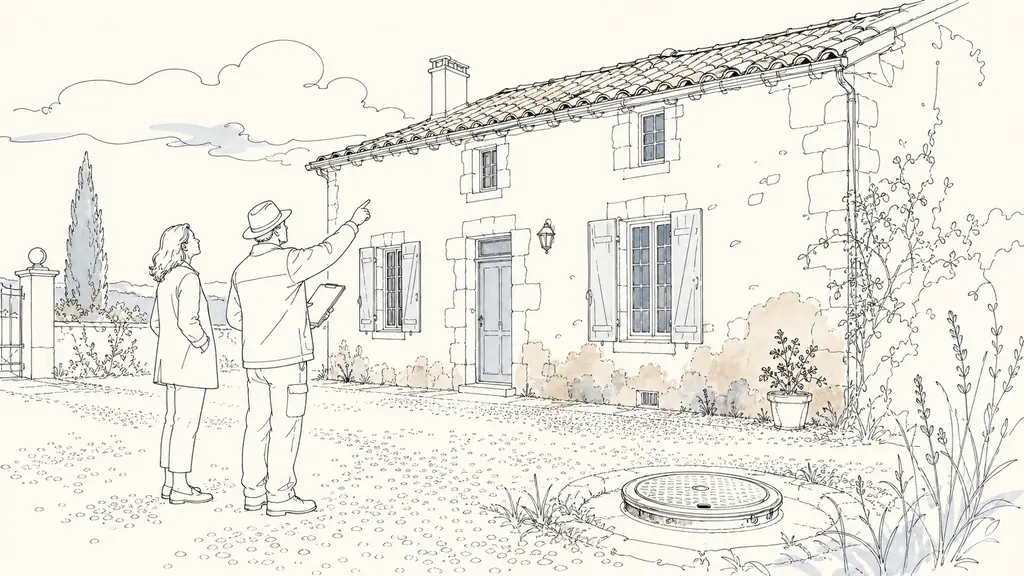
Your first reading happens outside, often before you even open the door. A handsome façade can distract from a tired roof, a sloping plot that channels water back towards the house, or outbuildings that have become expensive to make safe. In the Gers, many buyers picture themselves in the courtyard, enjoying the view or admiring the shutters, only to realise later that winter comfort, wet-weather access and the cost of bringing the property up to standard matter more than expected.
Top priorities to check:
– the roof and roof structure, especially where there are visible repairs, undulations or old signs of water ingress,
– damp, by looking at the base of the walls, the floors, bubbling plaster, the smell in closed rooms and the drainage around the house,
– windows and doors, insulation and heating, because a large period house can quickly become beautiful but expensive to live in,
– drainage, whether mains or non-mains, with particular attention to older or unsuitable systems,
– outbuildings, because a barn, wine store or hangar adds potential, but also maintenance, insurance and sometimes safety works.
You then need to test the house as a future place to live, not as an image. Is parking easy, is the light pleasant all year round, are the bedrooms genuinely practical, will the stairs still suit you in the long term, is the garden manageable without taking over every weekend? For a more ambitious residence, these markers often overlap with the usual questions around works and price for a maison de maître, because generous volumes and character do not make up for a poorly planned renovation.
Finally, the right approach is to price the priorities before making an offer, even if only roughly. If three major items pile up, roofing, heating and drainage for example, the property can no longer be judged on its purchase price alone, but on the true cost of bringing it up to standard. With a Gascon house, the classic mistake is not loving old property, it is underestimating what it needs to remain comfortable to live in.
FAQ
What do we really mean by a Gascon house?
It is not a single model. In Gascony, the term covers several types of older buildings, often in stone or rammed earth, linked to rural, village or bourgeois use.
Which items cost the most on an older property in the Gers?
The roof, structural repairs, damp, joinery, drainage, heating and energy renovation often weigh more heavily than decoration.
Is a large outbuilding always an advantage?
Not necessarily. It may add potential, but also costs, maintenance constraints and practical questions around use, access or compliance.
How do you compare two character houses without getting it wrong?
You need to compare the building style, the true condition, the hidden works, the location, day-to-day quality of life and ease of resale, not just the floor area.

Faye Gagnon rédige des contenus clairs et utiles pour aider les lecteurs à mieux comprendre l’immobilier dans le Gers et en Gascogne. Attentive aux réalités du terrain, elle s’attache à rendre accessibles les sujets liés à l’achat, à la vente et à la vie locale avec un ton chaleureux et fiable.
Envie d'aller plus loin ?
Laisse ton email, on te prévient dès qu'un nouvel article sort.